Equipment operator training and safety documents that hold up on the job.
Certified Equipment Safety Training LLC trains and certifies equipment operators for construction companies — hands-on evaluation, documented certification, delivered at your site. Plus the safety plans, audits, and programs that keep your jobs running.

Equipment operator training & certification
Every operator on your site needs documented training and evaluation — and when an incident or inspection happens, that paperwork is the first thing anyone asks for. Training is conducted at your site with your equipment, with hands-on practical evaluation and certification records issued for your files. All training meets and exceeds OSHA requirements (29 CFR 1926 and 1910) and EM 385-1-1 (2014). One requirement employers routinely miss: EM 385-1-1 (2014) 18.A.01 requires every equipment operator to be trained, qualified, and designated by the employer in writing — training alone does not satisfy it. Every equipment course includes a ready-to-use written designation template, formatted for client and GDA acceptance.
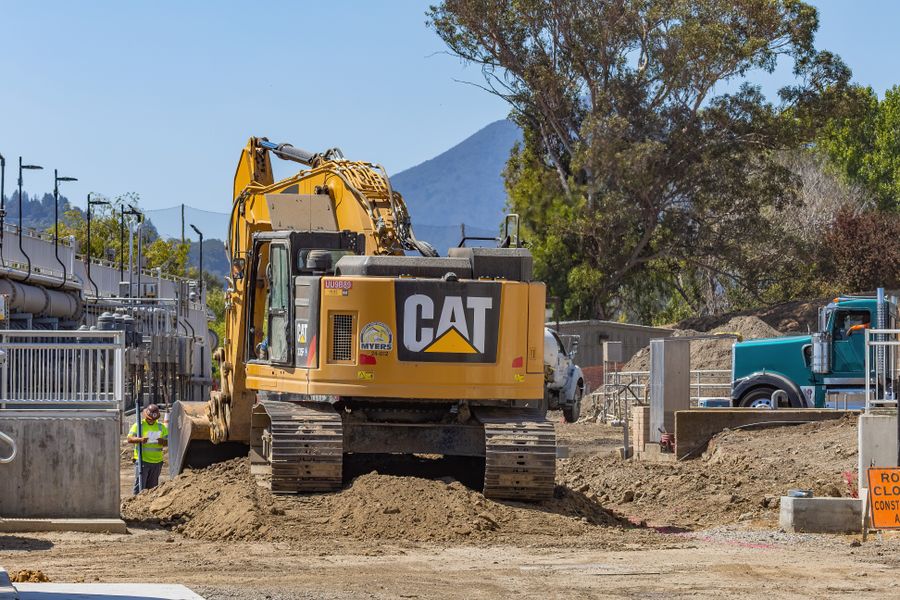 Heavy Equipment
Excavator / Trackhoe Operator Qualification
OSHA requires employers to instruct each employee in the recognition and avoidance of unsafe conditions and the regulations applicable to their work (29 CFR 1926.21(b)(2)); excavators fall under 1926.602(b), Excavating and other equipment. EM 385-1-1 (2014) 18.A.01 goes further: operators must be trained, qualified, and designated by the employer in writing. We deliver the training, evaluation, and that written qualification record.
- Documented operator qualification record
- Written employer designation template (EM 385 18.A.01)
- Swing radius & load capacity charts
- Quick-coupler & attachment inspection
- Hands-on practical evaluation
 Heavy Equipment
Backhoe / Loader Operator Qualification
Employer training duty per 29 CFR 1926.21(b)(2) with equipment requirements under 1926.602(a). Under EM 385-1-1 (2014) 18.A.01–.02, operators must be trained, qualified, designated in writing by the employer, and carry proof of qualification while operating. Instruction plus practical evaluation, with the qualification record for your files.
- Documented operator qualification record
- Written employer designation template (EM 385 18.A.01)
- Stabilizer setup & ground conditions
- Underground utility awareness
- Practical digging & loading evaluation
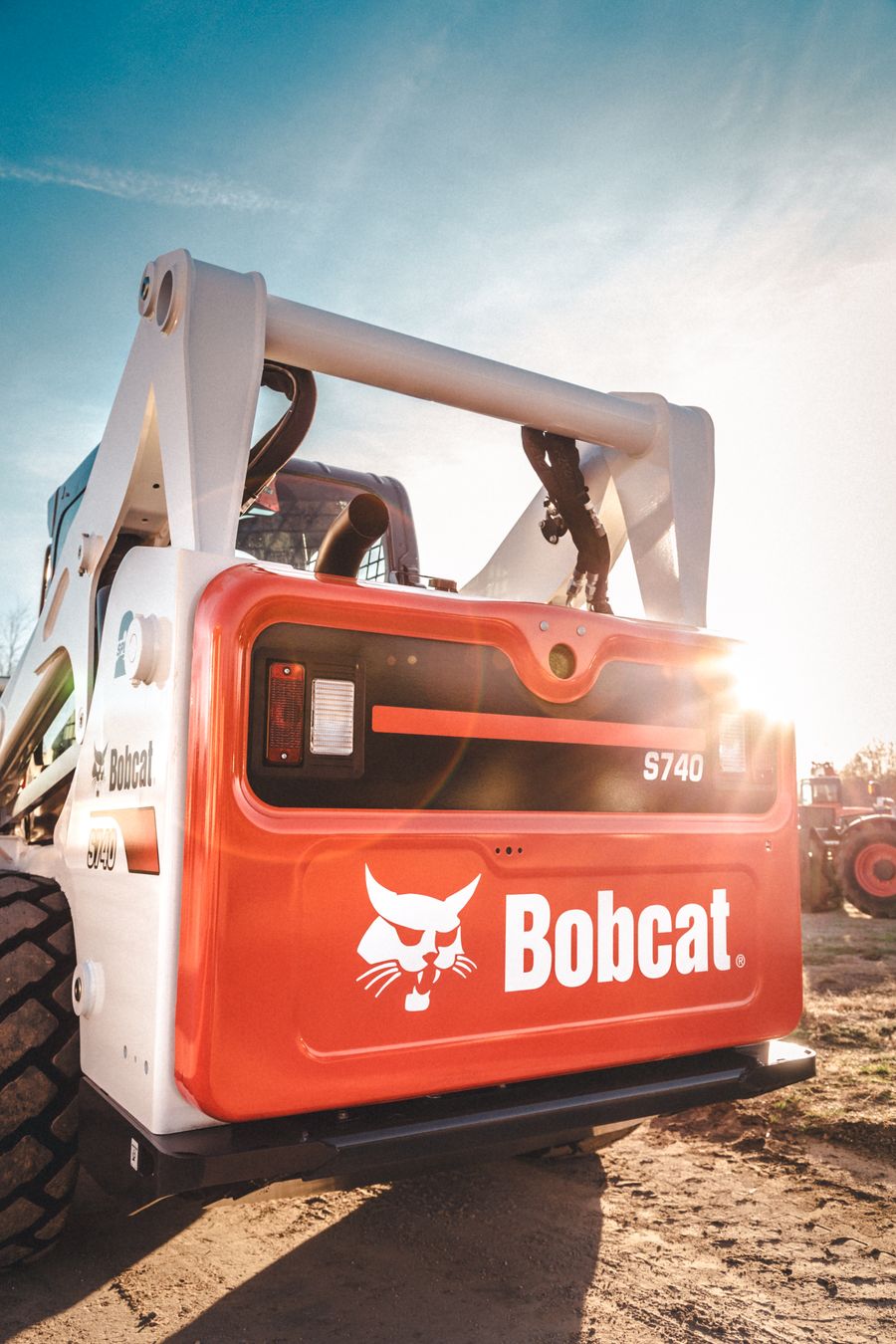 Heavy Equipment
Skid-Steer Loader Operator Qualification
Instruction in the recognition and avoidance of unsafe conditions per 29 CFR 1926.21(b)(2), applied to skid-steer operation under 1926.602(a) — pre-operation inspection, ROPS and seat belt use, and attachment safety. Meets the EM 385-1-1 (2014) 18.A.01 requirement that operators be trained, qualified, and designated in writing.
- Documented operator qualification record
- Written employer designation template (EM 385 18.A.01)
- Pre-operation inspection routine
- Rollover & stability rules
- Practical operating evaluation
 Heavy Equipment
Dozer, Scraper & Roller Operator Qualification
Earthmoving and compaction equipment training under 29 CFR 1926.602(a) — scrapers, loaders, crawler and wheel tractors, bulldozers, and similar equipment — with the 1926.21(b)(2) instruction duty met. Operators are qualified and designated in writing per EM 385-1-1 (2014) 18.A.01.
- Documented operator qualification record
- Written employer designation template (EM 385 18.A.01)
- ROPS & seat belt requirements
- Slope, grade & spotter procedures
- Hands-on practical evaluation
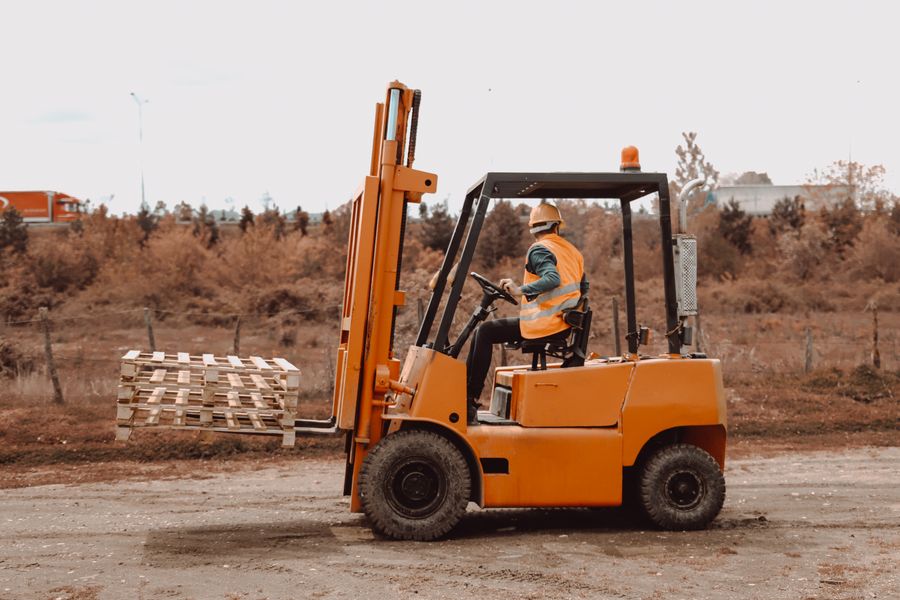 Powered Industrial Trucks
Powered Industrial Truck Operator Certification (Forklifts & Telehandlers)
OSHA classifies forklifts and telehandlers together as powered industrial trucks — training per 29 CFR 1926.602(c)–(d), which incorporates 1910.178(l). EM 385-1-1 (2014) 18.G.29.b permits only trained, qualified/certified, and designated operators, requires qualification in writing, and requires classroom plus practical training on the same type of truck used on the job. (Section 16.Q adds requirements when PITs hoist rigged loads.)
- Operator certification record per 1910.178(l)(6)
- Written employer designation template (EM 385 18.A.01)
- Class I–VII coverage, incl. rough-terrain telehandlers
- Stability triangle & load charts
- 1-on-1 driving evaluation
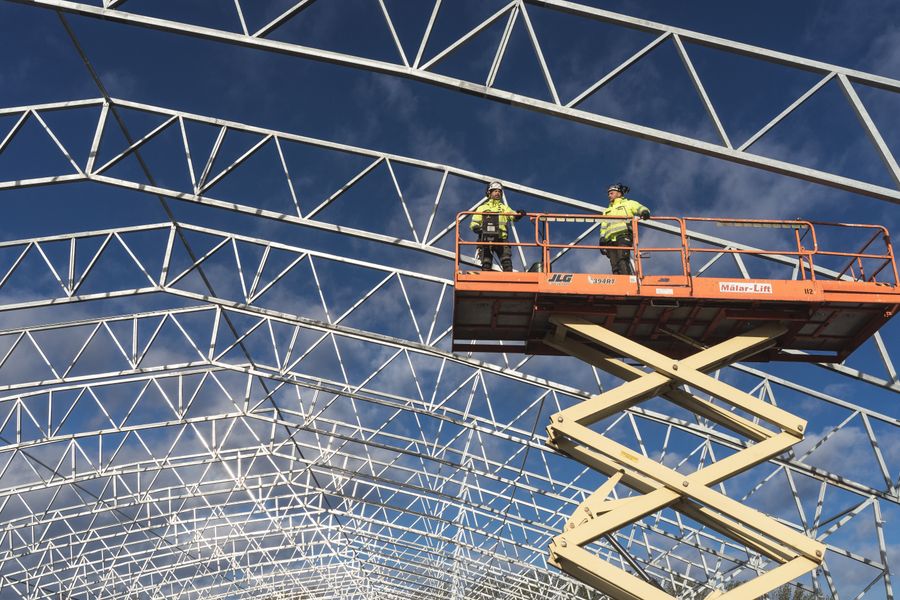 Aerial Work Platforms
MEWP Boom & Scissor Lift Operator
OSHA regulates these differently: boom lifts are aerial lifts under 29 CFR 1926.453, which permits only authorized persons to operate them (453(b)(2)(ii)); scissor lifts are mobile scaffolds under 1926.451 and 1926.452(w). Training for both falls under 1926.454, delivered by a person qualified in the subject matter. EM 385-1-1 (2014) 22.L.04 requires documented general and equipment-specific familiarization for all aerial work platform operators. Aligned with ANSI A92.
- Documented MEWP operator record
- ANSI A92 familiarization requirements
- Harness & anchor point rules
- Emergency lowering & ground controls
 Competent Person
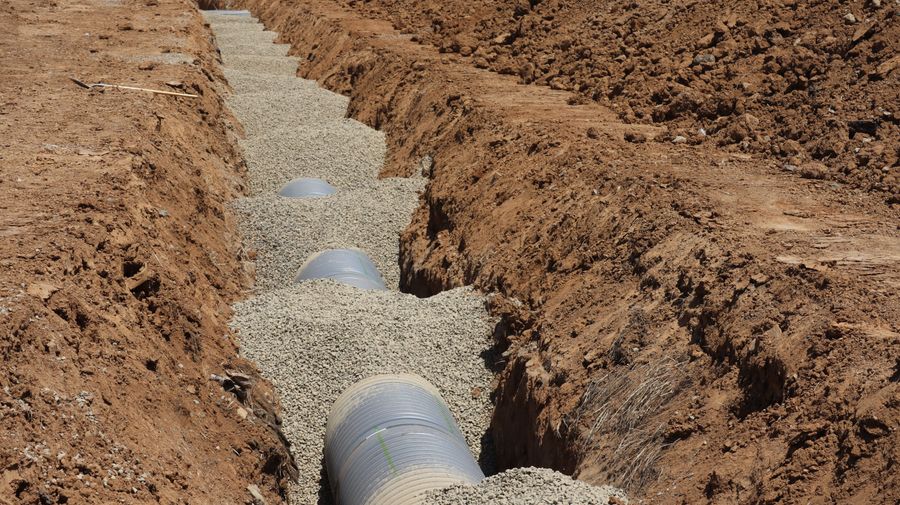
Excavation & Trenching Competent Person
OSHA defines a competent person as one capable of identifying existing and predictable hazards, with authorization to take prompt corrective measures (29 CFR 1926.650(b)), and requires daily excavation inspections (1926.651(k)(1)). EM 385-1-1 (2014) 25.A.02 requires the CP to inspect daily, before each shift, and after every rainstorm — and to demonstrate training, experience, and knowledge of soil analysis, protective systems, and Subpart P (25.A.02.b). This course trains and documents that designation.
- Competent person designation record
- Soil classification & testing
- Sloping, benching, shoring & shielding
- Daily inspection requirements
- Rescue plan requirements (EM 385 25.B.02)
 Fall Protection
 Training — Authorized Person / End User
OSHA requires a training program for each employee who might be exposed to fall hazards (29 CFR 1926.503(a)) and a written certification record with the employee's name, training dates, and trainer's signature (1926.503(b)(1)). EM 385-1-1 (2014) 21.C.05 requires each exposed worker to be trained by a Competent Person before using fall protection equipment. We deliver the training and issue exactly that record.
- Written certification record per 1926.503(b)(1)
- ABCDs of fall protection
- Free-fall distance calculation
- Rescue planning & prompt-rescue duty (1926.502(d)(20); EM 385 21.N)
- Harness fitting practice
 Emergency Response
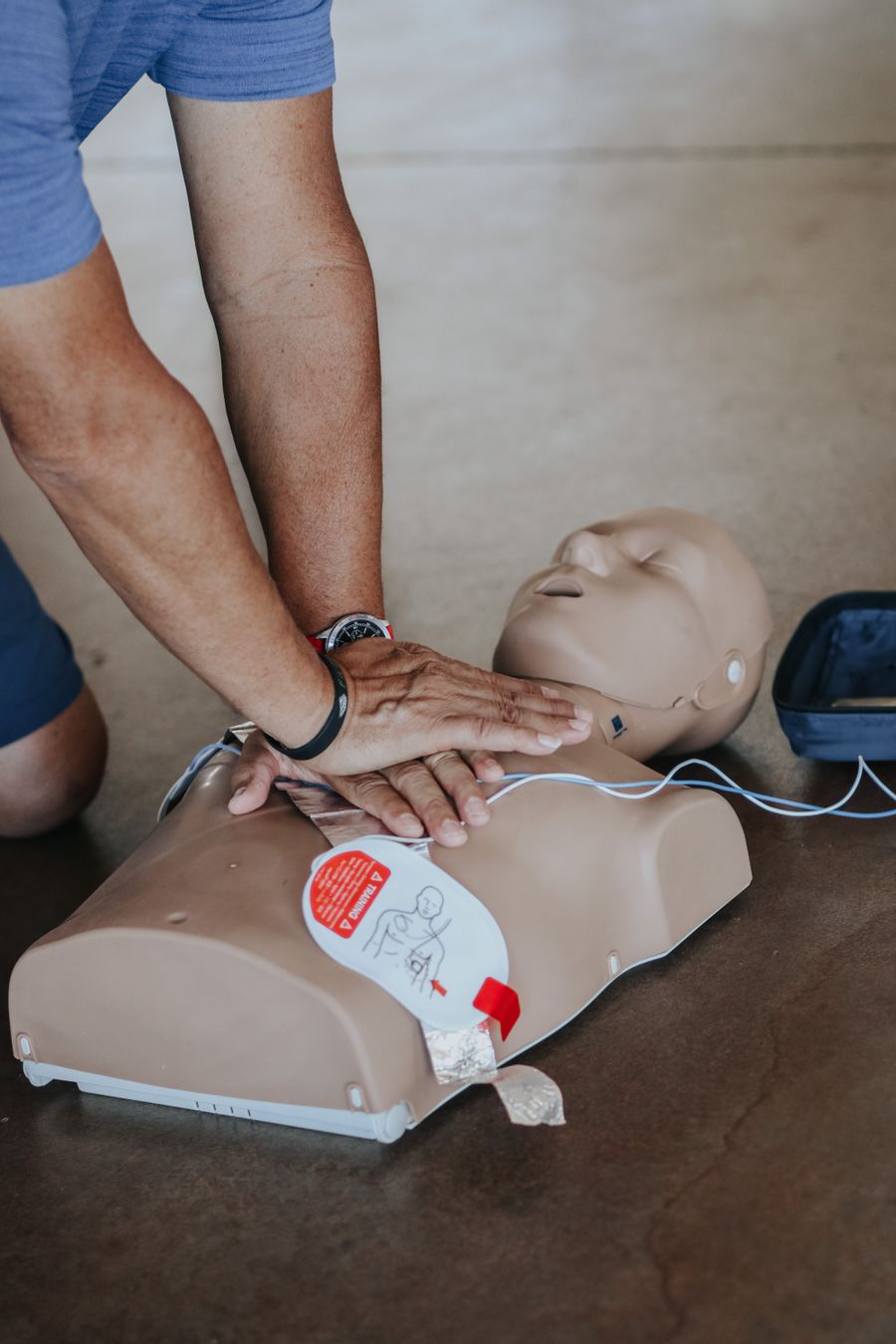
First Aid / CPR / AED — Red Cross Blended Learning
29 CFR 1926.50(c) requires that, in the absence of an infirmary, clinic, hospital, or physician reasonably accessible to the worksite, a person holding a valid first-aid certificate — the standard names the American Red Cross — be available to render first aid. EM 385-1-1 (2014) 03.A.02.a goes further: when emergency medical services are not accessible within 5 minutes and 2 or more workers are on location, at least 2 employees on each shift must be qualified in first aid and CPR, certified by the American Red Cross, American Heart Association, or an ILCOR-adherent organization (03.A.02.c), with a hands-on component that cannot be taken online and retraining every 2 years. Delivered in the American Red Cross blended learning format: online coursework completed at your crew's pace, then an in-person skills session at your site.
- American Red Cross First Aid/CPR/AED certificate, valid 2 years
- Online coursework completed before the site visit
- Hands-on skills session satisfies EM 385 03.A.02.c(1)
- Pairs with any equipment course on the same site visit
Don't see your equipment or course? Ask — group rates available for crews, and recertifications are scheduled around your production, not against it.
Everything else your safety program needs
Plans, programs, and audits written to the standard your contract cites — submitted ready for review, not boilerplate that gets kicked back.
Site-specific safety plans & work documents
Prepared for your scope and site conditions — each document below is built to the cited requirement and submitted ready for reviewer acceptance.
Activity Hazard Analyses (AHA)
Per EM 385-1-1 (2014) 01.A.14, each AHA defines the steps within the activity or Defined Feature of Work and identifies work sequences, specific anticipated hazards, site conditions, equipment, materials, personnel, and the control measures to be implemented — and work does not begin until the AHA is accepted (01.A.14.c). JSAs and JHAs are recognized as acceptable equivalents when they capture the same data, and we build to whichever format your contract calls for.
Standard Lift Plans (SLP)
EM 385-1-1 (2014) 16.A.03 requires a written SLP for every lift or series of lifts, developed and reviewed with all personnel involved, kept on the load handling equipment for the current lift, and retained for a minimum of 3 months. We prepare SLPs addressing all six 16.A.03 elements — personnel, area preparation, LHE considerations, load parameters, rigging, and environmental considerations including wind, storms, precipitation, power lines in the area of travel or load swing, and counterweight swing barricading — for standard (non-critical) lifts, a written level of planning 29 CFR 1926 Subpart CC does not itself require for routine lifts.
Fall Protection & Prevention Plans
EM 385-1-1 (2014) 21.D.01 requires a Fall Protection and Prevention Plan whenever personnel work at height or are exposed to fall hazards — developed by a Competent or Qualified Person and updated as conditions change and at least every six months. Where a written plan is used on the OSHA side, 29 CFR 1926.502(k) limits that option to leading edge, precast concrete, and residential work when conventional fall protection is infeasible or would create a greater hazard, prepared by a Qualified Person — we draft to whichever framework governs your site. Every fall protection plan we prepare includes the rescue plan and procedures EM 385-1-1 (2014) 21.D.01.e requires as a plan element — 21.N.01 requires a rescue plan whenever workers use fall protection equipment, with self-rescue and assisted-rescue provisions per 21.N.02, and 29 CFR 1926.502(d)(20) requires the employer to provide for prompt rescue of fallen employees or assure they can rescue themselves.
Excavation / Trenching Plans
EM 385-1-1 (2014) 25.A.01 requires an Excavation/Trenching Plan prepared by the Competent Person for Excavation or a Registered Professional Engineer and accepted before operations begin; excavations deeper than 5 feet require both the plan and an AHA. Plans address protective system selection under 29 CFR 1926.652 and the daily competent-person inspections required by 1926.651(k)(1). Each plan includes the written rescue plan EM 385-1-1 (2014) 25.B.02 requires — prepared by the Competent Person or a Registered Professional Engineer, accepted by the GDA before operations begin, maintained at depths over 5 feet, and containing self-rescue and assisted-rescue provisions, including how outside emergency responders are summoned when relied upon.
Emergency Action Plans (EAP)
Written to the minimum elements of 29 CFR 1926.35(b) — escape procedures and route assignments, critical plant operations, employee accounting after evacuation, rescue and medical duties, means of reporting, and points of contact. EM 385-1-1 (2014) 01.E.01 further requires emergency plans to be prepared in writing, reviewed with all affected employees, and tested for effectiveness — our plans are built to satisfy both.
Integrated Work Documents (IWD)
Work planning and control documents for sites operating under DOE and NNSA worker safety and health requirements (10 CFR 851), integrating hazard identification and controls into the work instruction itself.
Corporate safety programs
Company safety plans and written programs built from the ground up or brought current — structured to be accepted as pre-construction submittals.
Accident Prevention Plans (APP)
EM 385-1-1 (2014) 01.A.12 requires a contract- or job-specific APP submitted to the Government Designated Authority for acceptance before work starts. We write to the Appendix A outline so the plan interfaces with your overall safety and health program and moves through GDA review the first time.
Heat Injury & Illness Prevention
EM 385-1-1 (2014) 06.J.01 requires the APP and individual AHAs to address heat stress, and 06.J.02 requires a written Heat Stress Monitoring Plan incorporated into the APP — covering training, monitoring methods, signs and symptoms with first aid procedures, and clothing factors that reduce evaporation. We build in scheduled cool-down rest breaks and hydration provisions consistent with OSHA heat illness prevention guidance, because on the OSHA side heat hazards are enforced under the General Duty Clause, Section 5(a)(1) of the OSH Act — a defensible written program is your compliance record.
Fatigue Management Plans
Written to EM 385-1-1 (2014) 01.A.20, including worker training on fatigue symptoms and countermeasures and controls covering extended shifts and driving to and from work.
Third-party audits & inspections
29 CFR 1926.20(b)(2) requires your safety program to provide frequent and regular inspections of job sites, materials, and equipment by designated competent persons. EM 385-1-1 (2014) 01.A.13 requires those inspections/audits to be documented in writing with the inspector's name, date, and all findings — with corrective actions, responsibility, and timetable tracked to closure. That is exactly what we deliver: job site inspections, program audits, and recordkeeping reviews, documented to the 01.A.13 format with a deficiency tracking log you can post and maintain.
Environmental & stormwater
Stormwater Pollution Prevention Plans (SWP3/SWPPP) under TPDES Construction General Permit TXR150000 for Texas sites disturbing one or more acres — pollutant source identification, best management practices, inspection schedules, and site notices — plus Environmental Protection Plans prepared to your contract's specification. Stormwater compliance support for construction and civil operations through final stabilization.
Written to the standards that govern your work
Whatever manual your contract cites, your plans and training records are prepared against the specific requirements they'll be checked against.
- 29 CFR 1926OSHA Construction Industry standards
- 29 CFR 1910OSHA General Industry standards
- EM 385-1-1 (2014)USACE Safety and Health Requirements Manual
- 10 CFR 851Department of Energy Worker Safety and Health Program
- NNSANational Nuclear Security Administration site safety requirements
About
Certified Equipment Safety Training LLC provides safety and health services across construction, civil, and general industry work.
Our expertise spans both safety and industrial hygiene — which means your training and plans account for the exposures and hazards a checklist-only consultant misses.
Based in McAllen, Texas, serving the Rio Grande Valley — McAllen, Brownsville, Harlingen, Port Isabel, and surrounding communities. Training delivered on-site across the RGV; plans, audits, and document work available nationwide.


- Construction Health and Safety Technician (CHST)Board of Certified Safety Professionals
- Registered Industrial Hygiene Professional (RIHP)National Registry of Environmental Professionals
- American Red Cross Certified InstructorTraining Services
- First Responder TrainedEmergency medical response coursework
- Competent Person — Fall Protection24-hour course meeting EM 385-1-1 (2014) 21.C.04 and ANSI/ASSE Z359.2
- Competent Person — ExcavationNational Trench Safety
Know a construction company that needs operators certified?
We pay referral fees on business that lands. If you work in safety and know a company that needs training, plans, or audits, reach out.
Contact
Tell us how many operators, what equipment, and your timeline. Most quotes come back within one business day.
- Email info@cestsafety.com
- Phone (713) 364-4427
- Service area Rio Grande Valley — McAllen, Brownsville, Harlingen, Port Isabel